MISSION AND METHODOLOGY
Why we do what we do
Our Mission
- to encourage and help the natural desire to learn of every child with stimulating, entertaining proposals for children of all ages;
- to offer children and parents the opportunity to share this fascinating learning experience. Kids will grow up and parents will go back to their childhood;
- to provide teachers with new challenging experiences, for non-disciplinary learning, to be followed up by class activities;
- to attract interest and foster a well-disposed attitude towards culture, cooperation and respect for others and the environment;
- to let children and adults approach science and research promoting culture knowledge and new technologies.
Our main tool is a motivated, synergic and enthusiastic staff, who works in order to:
• project and design of challenging and stimulating exhibits;
• offer workshops for families and schools, providing education through entertainment;
• conceive educational activities for teachers, in order to provide innovative tools, that can be considered complementary to the traditional ones;
• conceive activities and services that ‘meet’ families needs;
• approach visitors through efficient, effective and appealing communication;
• ‘take advantage’ of any suggestions or complaints, either internal or external.
The cooperative operates with quality system EN ISO 9001:2015 for ‘Design and provision of play and educational activities for children from 0 to 12 years’ EA39, for ‘Design and provision of training services’ EA37 (Certificate No. IQ-0607-01 Dasa Rägister) and for Gender Equality UNI/PdR 125:2022 (Certificate No. IPDR-0924-10 Dasa Rägister).
Explora’s pedagogical and methodological model: an integrated ecosystem combining active pedagogy, Children Design and digital innovation
Explora is a constantly evolving ecosystem that focuses on the right to play and discover through a combination of scientific rigour and creativity.
We are not a traditional museum: we are a living place, where you learn by doing, where curiosity has no boundaries, where every object is an invitation to discovery. At the museum, every child becomes an active protagonist in their own growth journey.
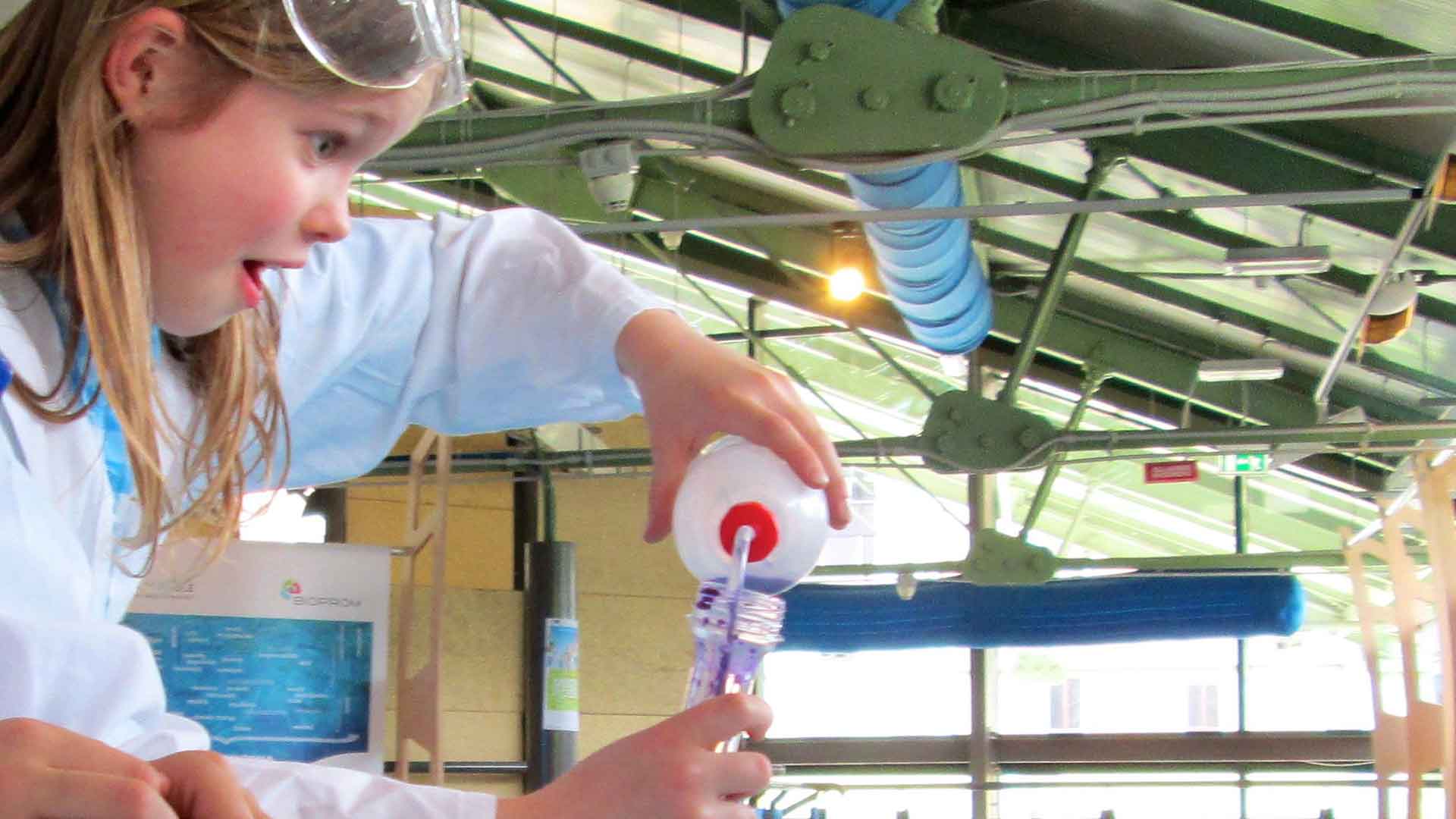
Learning through action
Our philosophy transforms the concept of the museum from a place of conservation to a vibrant ecosystem based on action.
We draw inspiration from Jean Piaget and John Dewey to offer an environment in which children are not spectators, but absolute protagonists of their own growth.
In this context, Learning by Doing is the reference methodology of the Children’s Museum, becoming the heart of an educational model in which doing and thinking come together in a single continuous path of discovery.
We believe that knowledge should not be transmitted vertically, but built horizontally through direct interaction, play and intellectual challenge that arises from concrete action.
Explora’s exhibits emphasise the indissoluble link between mind and body, following the principles of sensory-motor learning.
We know that for a child, touching, grasping and moving in space are purely cognitive acts. For this reason, the installations dedicated to early childhood are gyms for proprioception and fine motor skills, where sensory exploration becomes the primary language for mapping the world.
The emotional dimension and the pleasure of discovery
At Explora, learning is always accompanied by pleasure and curiosity. Play is not a break, but a driving force that ignites motivation, consolidates memory and fuels the desire to continue discovering.
Neuroscience reminds us that there is no cognition without emotion. The intrinsic pleasure of play acts as a catalyst, fuelling the desire to explore and making learning a rewarding and lasting experience.
Space as a third educator
Every area of Explora is designed to educate.
Following the vision of Loris Malaguzzi and the Reggio Emilia approach to education, the space becomes a “third educator”: welcoming, stimulating and open to endless possibilities for interpretation.
Each exhibit, designed according to the principles of Children’s Design, is an autonomous learning environment that stimulates questions rather than providing ready-made answers. Through the use of interactive displays, also designed according to a digital strategy, children experience physical, logical and social phenomena in a playful but realistic way. The displays allow abstract concepts to be translated into tangible experiences, transforming the museum into a bridge between theory and reality.
The digital strategy
Explora bases its educational strategy on play and emotion. Play-based learning is designed to convey content and ideas through strong interactivity and internalisation of the experience. In this context, Explora has developed its own strategy for integrating digital technology as a tool capable of amplifying and enhancing the play experience.
Explora’s digital strategy is divided into three areas:
- Interactive exhibits
- Digital education
- Digital transformation of business processes
Interactive installations are designed with the aim of creating emotional and physical engagement around a theme or tool. This paradigm leads to the use of digital technology as a vehicle for complex interactions that place the body and physical action at the centre of the learning process.
The design of the software and interaction follows a path of research, in-depth analysis and testing which, through various iterations, leads to the creation of complex and unique digital products. These products see immediate feedback, the possibility of manipulation and the use of mixed environments (physical/digital) as a fundamental element capable of increasing interaction, curiosity and engagement.
The choice of hardware and software solutions always favours tangible interfaces that place the body at the centre of the action. There are therefore three main lines of development: touchless installations (based on gestures and body tracking), electromechanical installations (based on sensors and actuators managed by microcontrollers), and phygital installations (mechanical drives that generate events and results in the virtual world).
Freedom, inclusion and competence
At Explora, there are no instructions, only opportunities. The absence of rigid instructions is a deliberate pedagogical choice. We let each child choose what to explore and for how long, developing a sense of agency – confidence in their own ability to act and understand.
We believe in inclusive learning that embraces diversity as a value and resource.
Following the principles of Universal Design for Learning (UDL), we make every experience accessible through multiple languages – visual, tactile, auditory – so that every visitor feels competent and welcome.
Knowing through connections
A pioneer in the adoption of Tinkering and the STEAM (Science, Technology, Engineering, Arts, Mathematics) approach, Explora goes beyond the segmentation of traditional knowledge: reality is not made up of compartments but of connections.
The installations are transformed into real-life “problem situations” in which science, technology, engineering, art and mathematics interact naturally in a single sensory experience. Thanks to this approach, we prepare children to think in an integrated, creative and systemic way, essential qualities for facing the future.
Educational workshops: The museum as an extension of the school
Explora’s educational workshops represent the meeting point between free exploration and structured teaching. Designed for schools of all levels, these courses transform the class into a true research community.
The excellence of these activities is guaranteed by the supervision of our Technical Committee. Thanks to this synergy, the museum is in constant dialogue with the world of education.
An integrated educational ecosystem
Explora is a meeting place for education, design and digital innovation, where the museum experience becomes learning. It is a place where play and knowledge come together, where education takes shape through the hands, eyes and mind.
Here, the right to explore becomes the first step in shaping curious, aware adults who are capable of wonder.
THE TECHNICAL TEACHERS’ COMMITTEE
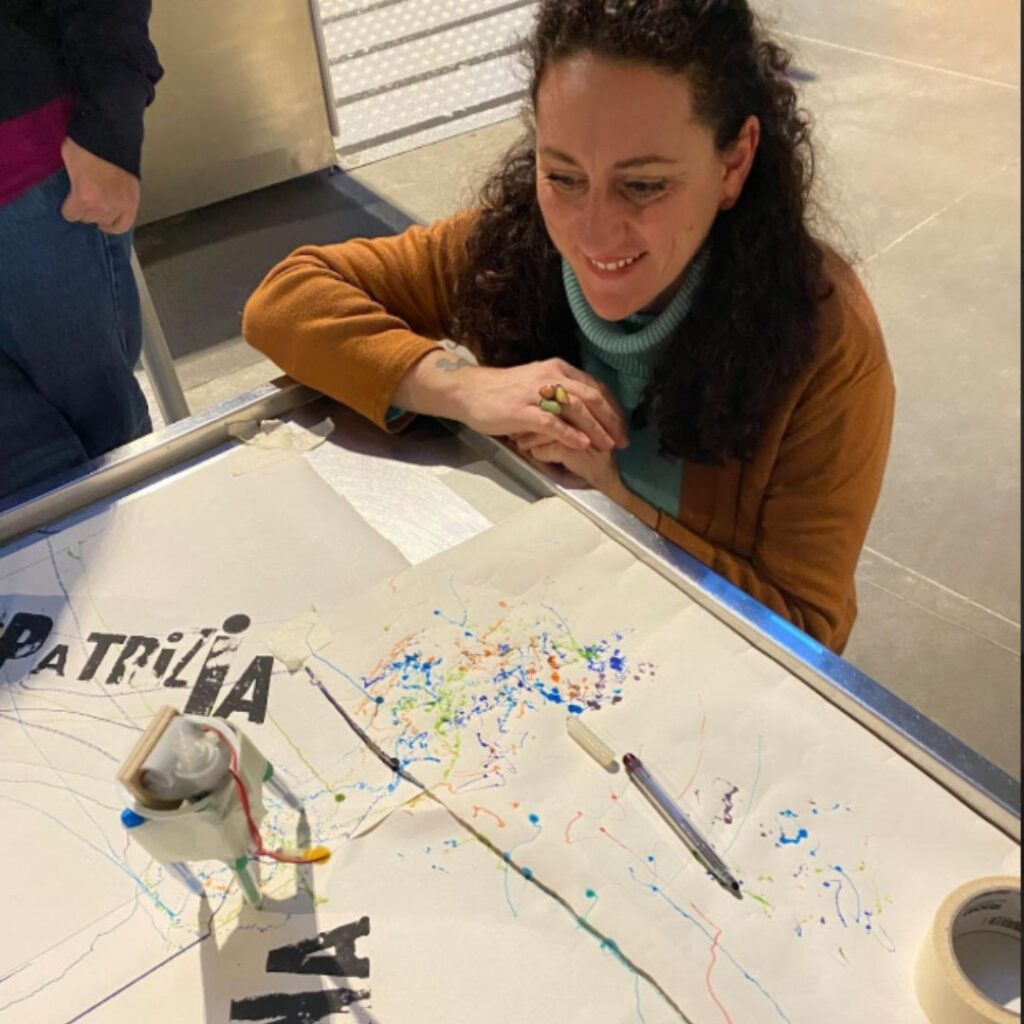
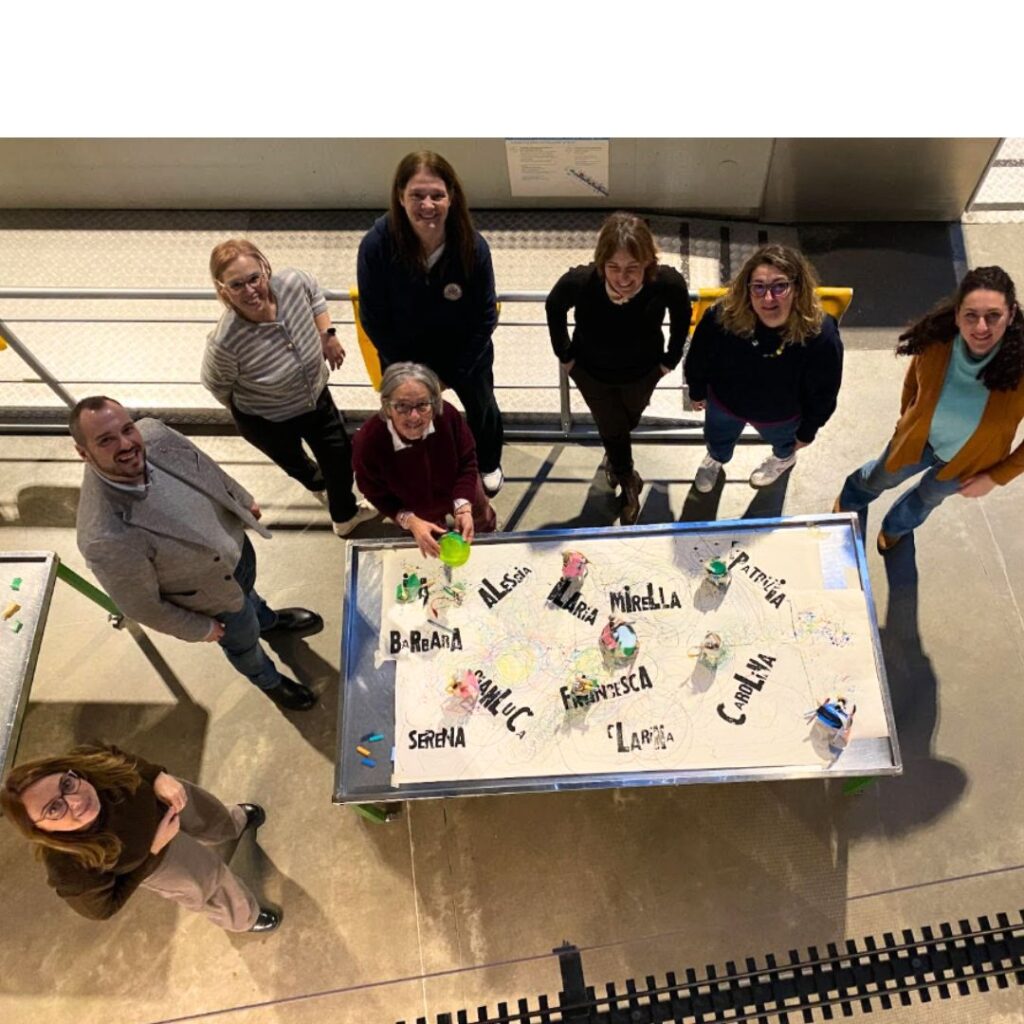
Explora’s Technical Committee is a working group that plays a fundamental role in ensuring pedagogical and methodological quality.
It is composed of teachers and education professionals who contribute their skills, experience and critical vision to support the development of the museum’s activities.
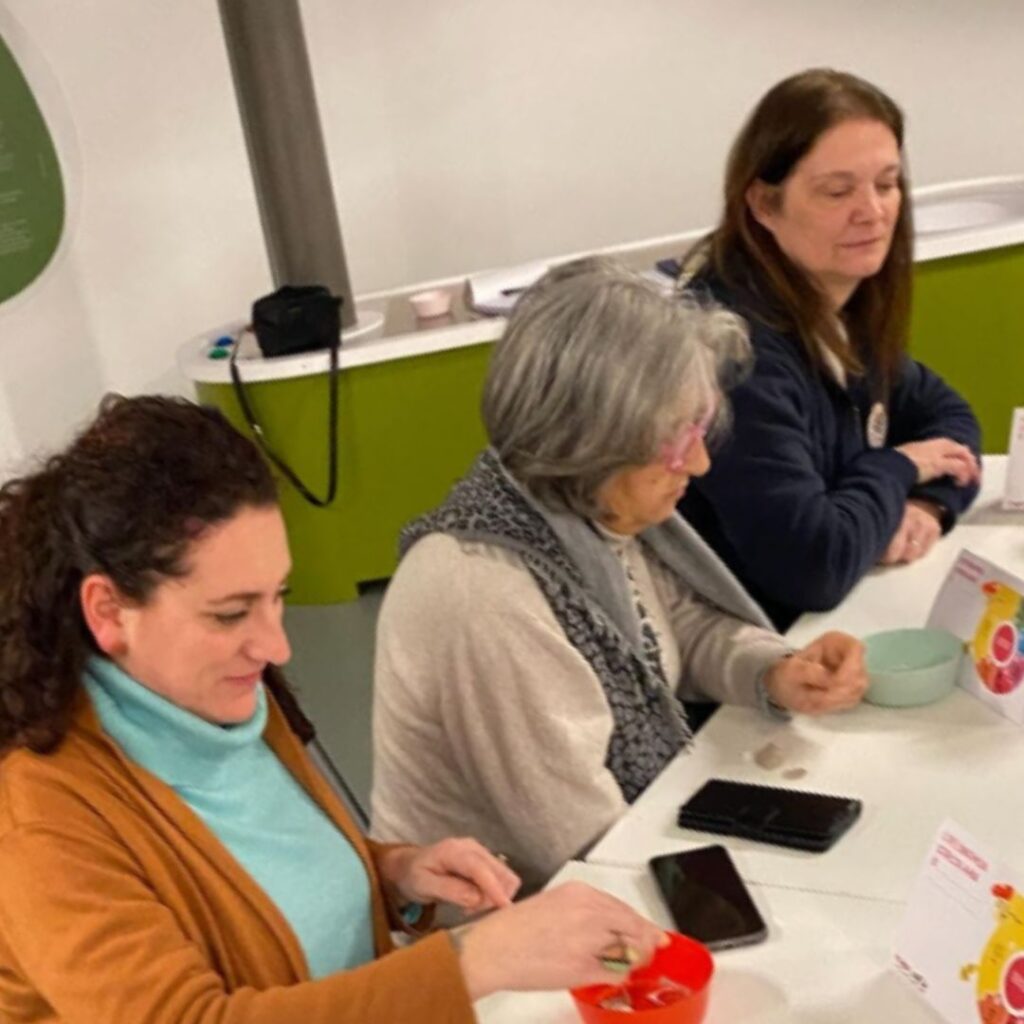
It is not a formal body, but rather a space for active discussion, experimentation, reflection and continuous improvement.
A place for analysis and shared planning
The Technical Committee meets according to an annual calendar to analyse projects, areas of work and educational proposals. Its task is to critically evaluate activities in the design and implementation phases, identifying any difficulties and proposing effective solutions.
Through this process, the Committee helps to ensure high quality standards, ensuring consistency between educational objectives, methodologies adopted and the real needs of the target audience.
Methodological support and quality assurance
One of the main objectives of the Technical Committee is to support Explora’s educational activities: from initial design to implementation and evaluation of results.
This work makes it possible to:
- prevent and correct any critical issues that arise during testing;
- strengthen the educational effectiveness of proposals;
- maintain constant alignment with the latest pedagogical references.
A bridge between museum and school
The Technical Committee plays a key role in the dialogue between Explora and the world of education. Thanks to the presence of teachers and professionals with diverse experiences, the museum is a natural extension of the school environment, capable of integrating formal and informal learning.
Comparison of skills, visions and professionalism
The richness of the Technical Committee lies in the plurality of perspectives that compose it. The dialogue between different professions favours an interdisciplinary and open approach, in which comparison becomes a tool for growth and innovation.
Who is on the committee
Barbara Riccardi | Primary school teacher at IC Padre Semeria, Rome.
Carolina Biscossi | Primary school teacher at IC Bruno Munari, Rome.
Clarina Di Sante | Primary school teacher at Istituto Comprensivo Roseto 1, Teramo
Francesca Ramadori | Primary school teacher at IC Filattiera, Rome.
Gianluca Amatori | Full Professor of Didactics and Special Education, European University of Rome.
Isa Procaccini | Primary school teacher at I.C. Fiano Romano.
Mirella Leonetti | Former primary school teacher, I.C. Claudio Abbado, Rome.
Patrizia Vari | Primary school teacher at Bonghi dell’I.C. Via Guicciardini, Rome.
Serena Feci | Primary school teacher at Nostra Signora di Lourdes, Rome
Alessia Bello | Head of Training and Education at Explora
Ilaria Catanorchi | Head of Training and Education at Explora
Dates and meetings
- 27 October 2025
- 24 November 2025
- 26 January 2026
- 23 February 2026
- 30 March 2026
- 25 May 2026